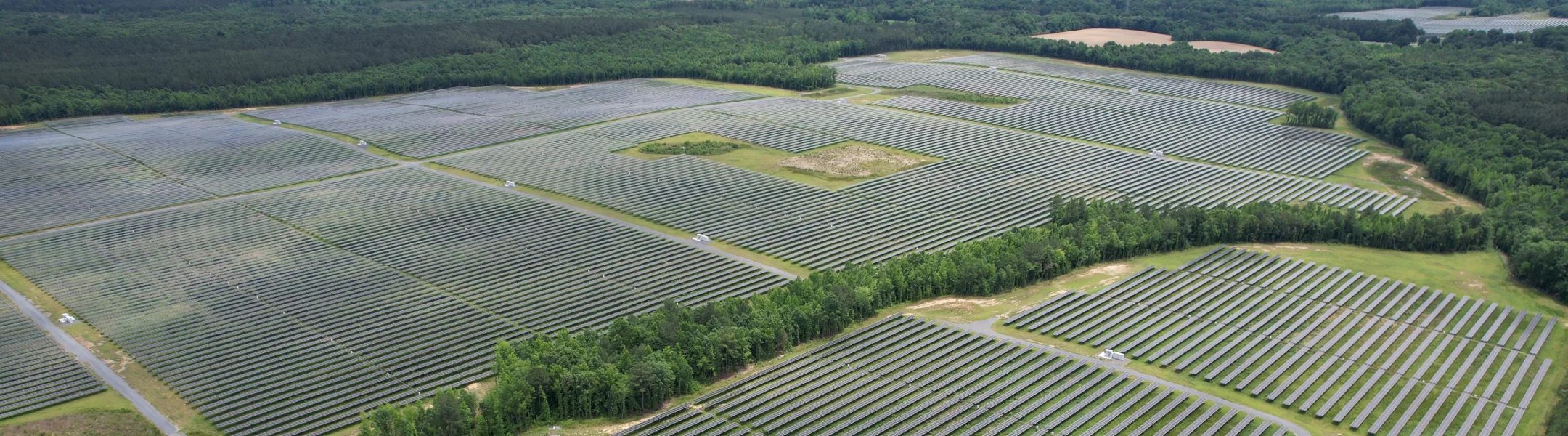
Welcome to Iona Solar
Investing in Knox County
Powered by Trust and Experience
Orion has brought dozens of renewable energy projects from conception to reality over the past three decades. We have done so in Indiana for the past 20 years, working with patience, determination, technical know-how, and a collaborative spirit with communities. We are proud of our track record and are excited to bring more home-grown, clean, cost-effective energy to Knox County.
We are an independent company, owned by folks who show up to work at Orion every day. With decades of renewable energy expertise since our founding in 1998, you can count on Orion to bring the most complex projects to successful completion.
We deliver on our promises. As solar technology has evolved, our approach has remained steadfast: respectful listening, honest communication and honoring our commitments to our partners. We seek to create value for all stakeholders, including generations to come, and we’re proud of how we do business and the friendships we’ve made.
Solar Done Right Means…

$193 Million+ Benefit for Knox County
A Lasting Local Investment
As proposed, the Iona project will generate more than $133 million in new tax revenues plus over
$60 million in new community benefit and economic development funding providing in excess of $193
million to strengthen Knox County over the life of the project.

Supporting Students & Schools
Supporting K-12 Education for Decades
New project funding will help support local schools through tax revenues and dedicated community
benefit funds, providing additional resources for teachers, classrooms, facilities, and curriculum
without increasing local taxes.

Strengthening Public Safety
More Resources for First Responders
The project will provide significant new funding for emergency services, fire and EMS response,
public safety operations, roads, and other essential county services, helping ensure first responders
have the resources they need to protect Knox County.

Jobs, Investment & Economic Growth
Powering the Local Economy
The project represents up to $1.2 billion in private investment, will create hundreds of initial
construction jobs, support domestic manufacturing, generate enough electricity to power nearly
85,000 Indiana homes, and will help to reduce local property tax rates.

Our Solar Neighbor Program
Direct Benefits for Nearby Residents
More than $18 million will be distributed through the Solar Neighbor Program, providing annual,
no-strings-attached payments to eligible homeowners located within one-third mile of project
facilities for as long as the project operates.

Building a Stronger Community
Beyond Energy Generation
The Iona project is committing millions of dollars that will contribute to the quality of life
throughout Knox County for decades.
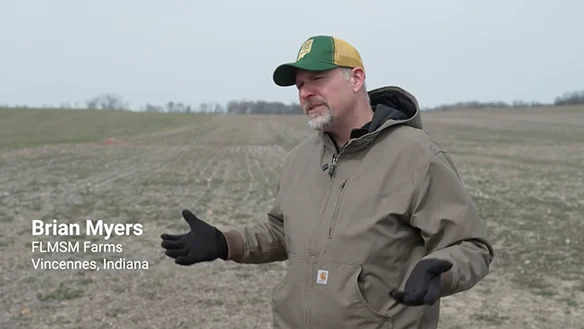
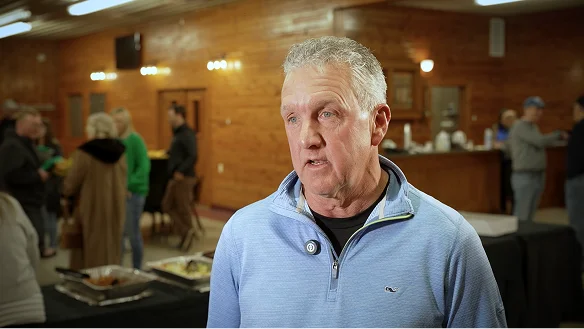
Why I’m choosing solar:
The local farmers and families that are part of Iona Solar
Frequently Asked Questions
”Utility-scale” typically describes projects that are 10 megawatts in capacity or greater. This differs from small-scale solar projects and rooftop solar that are much smaller in generation capacity and often directly serve an adjacent use such as a home, school, or airport, rather than being interconnected to a regional electric transmission system that can serve many different electric customers over a wider region.
Utility-scale solar has several advantages over small scale solar projects and rooftop installations, but the main advantage is cost. Small-scale solar installations (rooftop/parking structures/small industrial, etc.) produce electricity at a much higher cost than utility-scale solar due to economies of scale and higher financing costs. Utility-scale projects purchase equipment in bulk, using standardized designs, and benefit from economies of scale in mobilizing workers for construction. Utility-scale projects also benefit from lower financing costs because of the magnitude of capital deployed. Small-scale projects also have much higher ‘soft costs’ (such as permitting, interconnection, individualized engineering/design, and financing) as well as higher equipment and construction costs.
However, this is not an “either/or” decision: Both utility-scale and small-scale solar are vital to meeting the ever-increasing need for reliable, emissions-free, and affordable energy.
Yes! Improved solar technology allows for power generation year-round and typically when demand for electricity is greatest. Combined with battery-storage, solar projects serve as vital resources for affordable and reliable electricity even when the sun isn’t shining.
Indiana is no stranger to solar, as of the end of 2025 there were over 4,500 MW of solar installed and operating across the state. The growth of solar in Indiana is in large part due to the need for new generation resources to meet an increasing demand for electricity that can be deployed quickly and cost effectively. Indiana also has a robust transmission system to allow for power to be delivered where it’s needed and has suitable land for solar development.
Solar is a proven resource and because of increased efficiencies in the technology, its cost has dropped dramatically over the past decade making it cost competitive with, or cheaper than traditional coal, nuclear or natural gas. Unlike those other technologies, though, solar can be deployed quickly, providing an affordable resource that can help to mitigate the rising utility bills that Hoosiers are experiencing.
Absolutely. Solar panels are one of the cleanest and safest forms of power generation available. Solar energy emits no pollutants and its impact on human health is overwhelmingly positive. In fact, just the health-related air quality benefits are significant.
To provide decades of operation, solar cells are encapsulated between two layers of plastic, with a layer of tempered glass and a polymer sheet or industrial laminate and, like an automobile windshield, stays intact when an object hits it. Solar panels contain no liquids that can leak or spill affecting soil health or water quality and they are designed to withstand extreme weather from strong winds, hail, and even tornados. Real world examples from projects that have incurred damage from extreme weather have shown that solar projects do not pose a risk to the environment or public health.
Solar projects are designed to operate for up to 50 years. When the project reaches the end of its operational life, it will be fully decommissioned, which means removing all solar facilities and returning the ground to equal to or to better condition than prior to start of construction.
The project is responsible for all costs associated with decommissioning. Per agreements with landowners and the County, financial security is put in place at the start of construction, is evaluated at least every five years, and maintained through completion of decommissioning to ensure that funds are available to cover these costs no matter the scenario.
Additionally, up to 95% of a solar panel is recyclable, with the remaining amount able to be repurposed for other uses such as for construction materials.
In the end, the land will return to its current use: farming. The topsoil remains where it is today. An extensive vegetation management plan will be in place to ensure that soil health is maintained or even increased over the project’s operational life because of the ground cover installed after construction is complete. Installing and maintaining specific ground cover vegetation that is pollinator friendly increases the benefits of plant diversity on the site, reduces erosion and runoff, reduces invasive plant species, and improves soil health even compared to the existing agricultural use.
Proper drainage and stormwater management are critically important for a solar project. Orion ensures drain tiles are protected during site construction and is obligated to quickly repair or replace any drain tile that is damaged during construction. The project also must obtain local and state stormwater approvals that regulate drainage from the site.
Sites are selected based on factors including proximity to transmission lines, compatible land (for example, wetlands would need to be avoided), and landowners who want to participate.
More than 4,000 individuals currently work in the solar industry in Indiana. That figure will quickly escalate with the growth of the industry and doesn’t include the thousands of construction jobs solar projects generate. The industry has brought over $8.4 billion in total investment to the state.
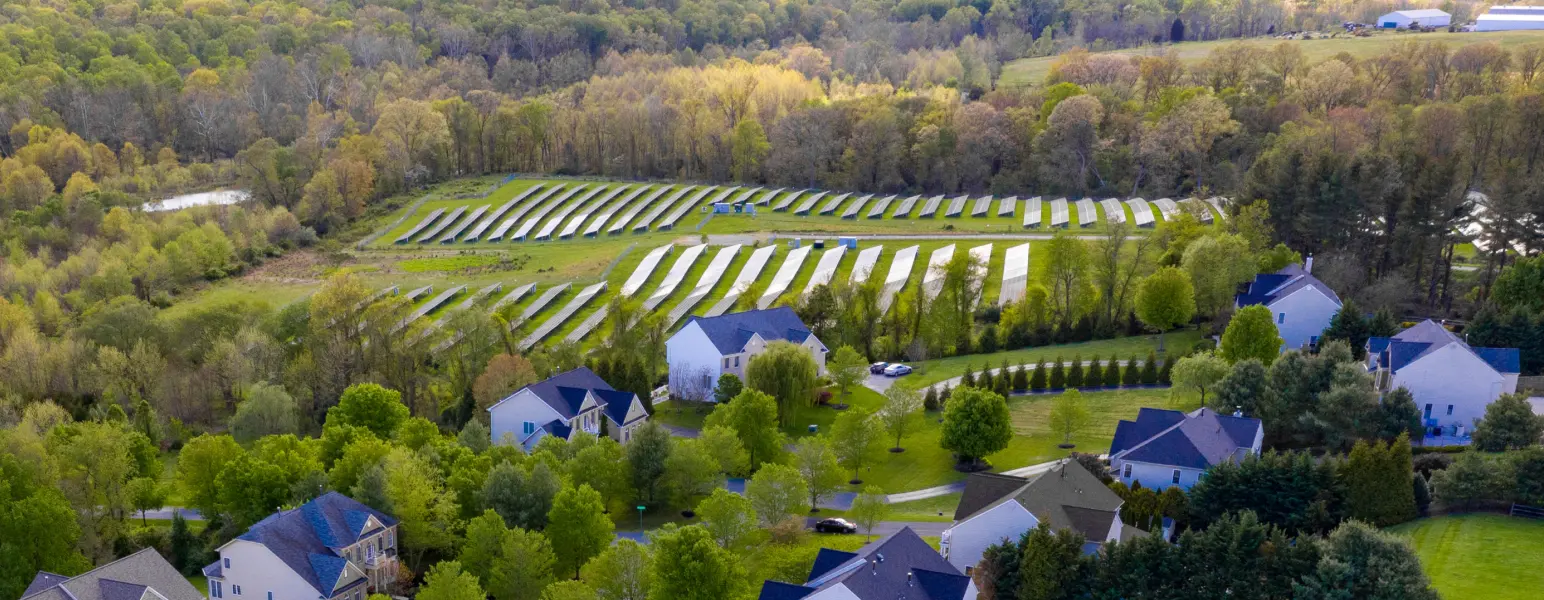
You may have already seen a small-scale or a utility-scale solar project. Solar panels have a low profile, and utility-scale solar projects often incorporate setbacks and, in some cases, vegetative screening around the perimeter. The Iona Solar Project will be carefully designed to better blend into the existing landscape by including significant setbacks from uninvolved residences and installing extensive vegetative screening with trees and large shrubs along roads, visually sensitive areas, and near occupied neighboring properties. Wildlife friendly fencing will be incorporated to allow small animals to pass under and large animals to jump over, so that wildlife will continue to have access across the site as well as be more aesthetically appropriate for a rural setting. Additionally, existing forested areas and wetlands will remain.
Solar projects are generally silent neighbors. During operations there are just a few components that generate sound: the main power transformer located at the project substation, inverters, and to a lesser extent the tracking mechanisms for the solar arrays as they periodically move to follow the movement of the sun. The main power transformer will be carefully sited to be far away from any residences to reduce the potential it can be heard. At Orion projects, the inverters are located away from the fenceline in the interior of the project, which combined with large setbacks from residences means it will be very difficult to hear any noise from the project at a neighboring property line.
Construction generally lasts 12-18 months. Over this period, construction isn’t taking place everywhere all at once. Crews typically move across a site in phases completing site prep, equipment installation, and facility commissioning. Construction hours will be limited to daylight hours no earlier than 7am nor later than 7pm on weekdays and no earlier than 9am nor later than 7pm on weekends.
Construction related traffic will be controlled by a Road Use Agreement between the project and the County that will be in place prior to start of construction. Important elements of that agreement will mandate some of the following:
- Road Repairs/Upgrades: The project is responsible for any necessary road upgrades and repairs before, during, and immediately after construction completion to ensure that roads are left as good as or better than before the start of construction.
- Traffic Safety/Control: A traffic safety plan will need to be in place prior to start of construction that will include speed limits for construction vehicles and specific ingress and egress routes to regulate construction traffic flow throughout the construction area while minimizing the impact to the general community.
- Dust control
- Communication: Coordination with local agencies and neighbors will be implemented prior to and during construction.


Contact Us
Have questions about Iona Solar Power Project?
Please email us: [email protected]
Want to learn more about Orion?
Visit our website.